
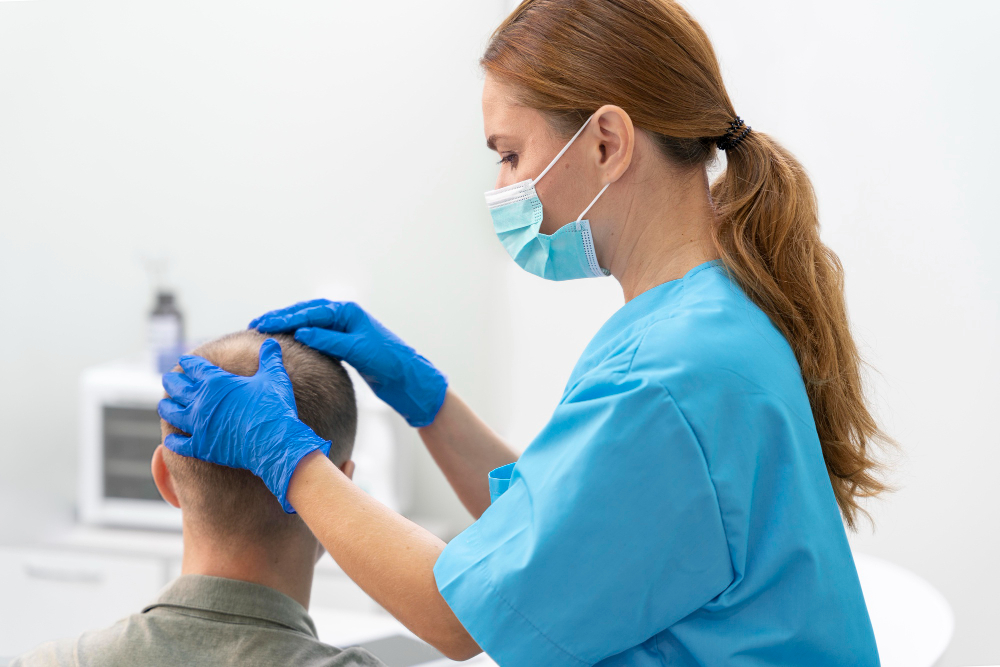
If you’re researching hair loss treatments, it’s easy to get confused between PRP and steroid injections. While both involve scalp injections, they treat different causes of hair loss and work in very different ways. PRP is commonly used to stimulate weakened hair follicles and support long-term hair growth, while steroid injections are often used to reduce inflammation in autoimmune hair loss conditions such as Alopecia Areata.
In Raleigh, more patients are looking for clear answers before investing time and money in hair restoration treatments. According to Sumeet Jindal, one of the most common mistakes patients make is choosing injection-based treatments before identifying the actual cause of hair loss. In clinical evaluation, factors such as scalp inflammation, follicle miniaturization, hormonal changes, and autoimmune activity often determine whether PRP, steroid injections, or another treatment approach may be more appropriate.
Is PRP Better Than Steroid Injections for Hair Loss?
PRP may be better for long-term hair restoration in pattern hair loss and thinning hair, while steroid injections are often used for inflammatory hair loss conditions like alopecia areata. Both PRP and steroid injection for hair loss depend on your diagnosis, scalp condition, follicle activity, and treatment goals.
What Is PRP for Hair Loss?
Platelet-rich plasma is a restoration treatment that uses a concentrated portion of your own blood to support healing, circulation, and follicle activity.
During a PRP injection appointment, a small blood sample is drawn from your arm. The blood is then spun in a centrifuge to separate platelet-rich plasma for hair restoration from other blood components. That plasma contains growth factors that may help signal repair, improve scalp circulation, and support healthier follicle function.
For hair loss, PRP is injected into areas of thinning. The goal is not to create new follicles from nothing. Instead, PRP may help strengthen weakened but still viable follicles.
This is why PRP for hair loss is often used for:
- Male pattern thinning
- Female pattern thinning
- Early follicle miniaturization
- Stress-related shedding
- Postpartum hair shedding
- General density concerns
Research has found that platelet-rich plasma hair restoration may improve hair density and shaft thickness in selected patients.
What Are Steroid Injections for Hair Loss?
Steroid injections for hair loss refer to corticosteroid injections placed directly into the scalp. These are most often used for alopecia areata, a condition in which the immune system attacks hair follicles, causing round or patchy areas of hair loss.
Steroid injections for alopecia reduce inflammation. They calm the immune response around the follicle, so hair may have a better chance of regrowing.
According to the American Academy of Dermatology, corticosteroid injections are commonly used for patchy alopecia areata and may help some patients regrow hair in treated areas.
PRP vs. Steroid Injection for Hair Loss: How Do They Work Differently?
| Factor | PRP | Steroid Injection |
| Treatment source | Patient’s own blood | Corticosteroid medication |
| Main goal | Stimulate weakened follicles | Reduce inflammation |
| Best for | Pattern thinning and early hair loss | Patchy autoimmune hair loss |
| Common use | Hair density and follicle support | Alopecia areata control |
| Longevity | Often used for long-term maintenance | Often used for short-term inflammation control |
| Side effects | Mild soreness, redness, swelling | Skin thinning, pigment change, scalp indentation |
| Treatment plan | Usually, a series with maintenance | Based on inflammatory activity |
What are the Key Benefits of PRP for Hair Loss?
PRP appeals to many patients because it uses material from your own body. There is no donor product and no synthetic filler involved.
The key benefits include:
- Natural treatment source
- Minimal downtime
- Support for thinning areas
- May improve hair density
- May strengthen miniaturized follicles
- Low risk of allergic reaction
- Can be repeated as part of a maintenance plan
Wondering when you will start seeing noticeable hair growth results? Hair grows slowly, so most patients need several months to see meaningful results.
What are the Key Benefits of Steroid Injections?
Steroid injections can be useful when hair loss is driven by inflammation rather than pattern thinning.
The potential benefits include:
- Fast control of scalp inflammation
- Useful for alopecia areata
- May help patchy hair regrowth
- Office-based treatment
- Often used when the immune system is involved
When is PRP the Better Choice?
PRP may be a better fit when your hair is thinning, shedding, or experiencing early follicle weakening rather than when active inflammation is present.
At PRP in Raleigh, Dr. Sumeet Jindal often recommends PRP when follicles are still active but weakened. These patients may notice widening parts, thinner ponytails, or gradual recession rather than sudden bald patches.
PRP hair restoration Raleigh NC may be considered for:
- Male pattern hair loss
- Female pattern hair loss
- Early scalp thinning
- Stress-related shedding
- Postpartum shedding
- Maintenance after other hair restoration nc treatments
PRP works best when follicles are still present. If an area is completely bald and follicles are no longer active, PRP may not be enough.
When Steroid Injections May Be Better?
Steroid injections may be more effective when hair loss is sudden, patchy, and associated with inflammation or autoimmune activity. This often includes alopecia areata. Patients may notice smooth, round patches on the scalp, beard, or brows. In these cases, the follicle may not be dead. It may be under immune attack. Steroid injections may help calm that attack.
Can PRP Injection and Steroid Injections Be Combined?
Yes, in some cases. But not for everyone. A patient with alopecia areata may need inflammation control first. Another patient may have pattern thinning plus scalp inflammation. In that case, a provider may consider a staged or combination plan. Combining hair loss injections without understanding the cause can lead to poor results.
At PRP in Raleigh, treatment planning starts with the scalp, the pattern of loss, medical history, and realistic goals. That helps Dr. Jindal decide whether PRP, steroid injections, nano-based regenerative treatment, or another option makes the most sense.
What are the side effects of both PRP vs Steroid Injection?
Both PRP and steroid injection treatments are well tolerated when performed by qualified medical providers, but they are not risk-free.
| PRP injection Side effects | Steroid Injection Side Effects |
| Mild scalp soreness | Skin thinning |
| Temporary swelling | Temporary discomfort |
| Redness | Pigment changes |
| Tenderness | Small scalp indentations |
| Pinpoint bleeding | Visible dimpling in the treated area |
| Bruising | Rare infection risk |
What About Nano Hair Regrowth Treatment in Raleigh?
Patients are exploring nano-hair regrowth treatment options using newer regenerative hair restoration Raleigh, NC technologies.
At PRP in Raleigh, nanofat stem cell hair restoration is another option for select candidates. This treatment uses a small amount of the patient’s own fat, processed into nanofat, then injected into thinning scalp areas. The goal is to deliver regenerative cells and growth factors that may support the scalp environment.
This nano hair regrowth treatment may be considered for patients seeking hair restoration beyond standard PRP in Raleigh, especially when a more advanced regenerative approach is appropriate.
PRP Hair Restoration Raleigh
Everyone experiences hair loss differently. Some people notice mild thinning at the hairline, while others experience shedding due to stress, hormonal changes, or patchy hair loss. PRP in Raleigh begins treatment with a detailed scalp evaluation to determine the cause of the condition.
If you experience hair loss due to multiple factors, you may benefit from PRP therapy for thinning hair, regenerative scalp treatments, or maintenance sessions. In patients with active hair follicles, PRP can improve thickness, strengthen existing hair, and slow further hair loss.
For inflammatory conditions like alopecia areata, steroid injections may sometimes be recommended instead. In certain cases, both treatments can be combined after a proper medical evaluation.
Expert Insights from Dr. Sumeet Jindal
When it comes to PRP in Raleigh, Dr. Sumeet Jindal takes a personalized and natural approach to hair restoration.
Dr. Jindal is a board-certified surgeon with advanced training in ophthalmology, oculoplastic surgery, and laser surgery. His experience with facial anatomy and injection techniques is important in treatments such as PRP and steroid injections, where precision and proper diagnosis can directly affect results.
At PRP in Raleigh, the goal is to explore regenerative options before considering surgery whenever possible. Depending on the cause of hair loss, Dr. Jindal may recommend PRP therapy to strengthen thinning hair and support healthier follicles, or steroid injections for alopecia areata. Some patients may benefit from a combination approach.
Conclusion
So, which treatment is better for hair loss: PRP or steroid injections? The answer depends on the underlying cause of your hair loss.
Often, PRP is a stronger fit for long-term hair restoration when the issue is thinning, pattern hair loss, weak follicles, or early miniaturization. It supports the scalp using growth factors from your own blood and usually works best through a series of sessions.
Steroid injections are often better suited for inflammatory or autoimmune hair loss, especially alopecia areata. They are used to reduce inflammation and may help restore patchy areas of hair loss when the immune system attacks the follicles.
If you are dealing with thinning hair, patchy hair loss, or early scalp changes, PRP in Raleigh can help you understand your options clearly. Dr. Sumeet Jindal creates customized hair restoration plans based on your scalp condition, hair loss pattern, medical history, and long-term goals.
To explore PRP, visit PRP in Raleigh or call 919-929-6006 to schedule your consultation.
FAQs
Is PRP more effective than steroid injections?
PRP may be more effective for pattern thinning and weakened follicles. Steroid injections may be more effective for alopecia areata or inflammatory hair loss.
How many PRP sessions are needed for hair loss?
Many patients start with a series of treatments spaced several weeks apart. Maintenance sessions may be recommended every 6 to 12 months, depending on your response and hair goals.
Are steroid injections permanent?
No. Steroid injections can reduce inflammation, but they do not permanently cure autoimmune hair loss. Some patients need repeat treatments if inflammation returns.
Does PRP work for alopecia areata?
PRP may help some patients, but steroid injections are more commonly used for active patchy alopecia areata. A physician can decide whether PRP, steroids, or a combination plan is appropriate.
Is PRP painful?
Most patients describe PRP scalp injections as tolerable. You may feel pressure, pinching, or mild soreness. Discomfort usually fades quickly after treatment.
How soon do PRP results appear?
Hair restoration results take time. Many patients begin noticing changes around 3 to 6 months, with continued improvement depending on follicle health and the treatment plan.